
Most investors should have a 5% to 10% allocation to gold for diversification. They should stagger their investments to mitigate timing risk.

Investors' wealth has eroded by over Rs 6.15 lakh crore in three days of market decline amid weak global cues and persistent selling by foreign funds. The BSE benchmark Sensex tumbled for the third straight session on Friday to close at 59,306.93, down 677.77 points or 1.13 per cent. In three days, the 30-share index has lost 2,043.33 points or 3.33 per cent.

IndiGo share price today: IndiGo share price fell as much as 4.8 per cent to a low of Rs 4,275 per share on the BSE in Monday's intraday trade as investors booked profit in the stock post a its April-June quarter (Q1) results for financial year 2024-25 (FY25). The stock ended 1.36 per cent lower at Rs 4,430 as against a 23-points gain in the benchmark BSE Sensex. The selling also got exacerbated as the management commentary, post Q1FY25 results, highlighted that inflationary pressure could likely dent July-September (Q2FY25) performance.

Brokerages expect India Inc to report an upturn in earnings for the March quarter of 2022-23, after a relatively muted showing in the previous two quarters. This growth is expected to be led by banking, financial services and insurance (BFSI) companies, FMCG firms, and automobile makers. The combined net profit of the Nifty50 companies (excluding Adani Enterprises) is expected to have grown 15.6 per cent to Rs 1.77 trillion in Q4FY23, from Rs 1.53 trillion a year ago.

Omkeshwar Singh, head, Rank MF, a mutual fund investment platform, answers your queries.

Ulhas Joshi, Head -- Sales, Rank MF, a mutual fund investment platform, answers your queries.

Trading in the equity market this week will be highly influenced by a host of important triggers, with quarterly earnings from IT majors TCS, Wipro, and domestic inflation and IIP data taking the centre stage in dictating the movement in equities, analysts said. Besides, global factors and trading activity of foreign investors will also drive markets. "We are approaching the first quarter earnings season, with HCL Tech, TCS and Wipro set to report their earnings this week.

Tata AIG, ICICI Lombard and Nippon Life have evinced interest for the profit-making insurance arm of Reliance Capital (RCap), joining several prominent financial companies from India and abroad in the race for RCap's assets. The final day to submit an expression of interest (EoI) was March 25 and the bidders will now get access to the latest information about RCap before they make financial bids.

However, experts caution that investors should not expect the big returns they got from the sector between March and September 2020.

Make minimum payments on all debts, then use extra funds to tackle the smallest debt first.
.jpg)
Q1 results indicate more pain ahead, as slowdown has spread to more sectors, pricing power has come down and rising interest cost is eating into profits.

Brokerages expect Nifty50 companies to have cumulatively witnessed strong double-digit growth in their earnings in the first quarter of FY24 (Q1FY24). This growth in the combined earnings is expected to have been driven by banks, automakers, and oil & gas companies. Other sectors may report muted profit growth.

The stock of the country's largest listed oral care company -- Colgate-Palmolive (India) Ltd is up 18 per cent over the past month. The gains were led by better than expected June quarter (Q1) performance of the 2023-24 financial year (FY24) and growth revival expectations of the oral care category. The company's volume growth is pegged at 5-8 per cent in Q1FY24. This is the second consecutive quarter of volume growth.
HDFC Bank's market capitalisation (market cap) touched Rs 13 trillion in Thursday's (December 28, 2023) intra-day trades as the largest private sector lender is set to report its sharpest monthly rally in the past two years. At 10:33 AM; HDFC Bank's market cap stood at Rs 13.03 trillion, the BSE data shows. The stock was up 1 per cent at Rs 1,717.90 in intra-day trades on December 29, inching towards its record high of Rs 1,757.80 touched on July 3, 2023.

Ask rediffGURU and PF expert Milind Vadjikar your insurance, stocks, mutual fund and personal finance-related questions.

At a time when exchange-traded funds (ETFs) were unloading Jio Financial Services from their portfolios, some active fund managers were placing large bets on the demerged financial services arm of Reliance Industries Ltd (RIL), a report by Nuvama Alternative & Quantitative Research shows. Motilal Oswal Mutual Fund and Quant Mutual Fund were the top MF buyers of the stock in August. They bought around 60 million shares each, together investing around Rs 2,800 crore.

The BSE MidCap and SmallCap indices during this period have outperformed the blue-chip indices.

The inflation data for May and the US Fed interest rate decision are the crucial factors that would dictate terms in the equity market this week, analysts said. Moreover, foreign fund trading activity, movement of rupee and crude oil prices would be the other key monitarables for the markets, they added. "All eyes will be on the US FOMC (Federal Open Market Committee) decision scheduled on June 15, and the market is fearing aggressive rate hikes amid inflation monster. "Bank of Japan will also announce its credit policy on June 17.

The rupee depreciated by 9 paise and settled at its all-time low level of 83.13 against the US dollar on Wednesday, weighed down by a surge in crude oil prices and strong American currency. Forex traders said the Indian rupee depreciated as the US dollar rose to the highest levels in six months. Moreover, elevated crude oil prices also weighed on rupee.

Domestic equities will be mainly driven by global market trends, foreign institutional investors' movement and developments around new Covid variant Omicron this week, according to analysts. Markets traded under pressure last week following weak global cues and overall investor sentiment remained downbeat throughout the week, they observed. "Global markets, Omicron variant, dollar index and FIIs' behaviour will be key factors to drive the market this week," said Santosh Meena, head of research, Swastika Investmart Ltd. One major event last week was US Federal Reserve's announcement that it will end bond-buying from March, and it also signalled starting rate hike cycle thereafter.

A strong performance in the July-September quarter of 2023-24 (Q2FY24), an upward revision in the margin guidance and sustained momentum in US sales has helped the stock of pharmaceutical major Cipla gain about 2 per cent over the last two trading sessions. The brokerages have upgraded the earnings estimates for this financial year (FY24) by 6-9 per cent to factor in the improved margin guidance and sales in the US market. Led by the US market, which rose by 31 per cent, the company posted a 16 per cent growth in revenues.

Equity investors have become poorer by more than Rs 18.74 lakh crore as the market continued to remain bearish for the fifth session on the trot on Thursday. The 30-share BSE Sensex tumbled 1,158.08 points or 2.14 per cent to end below the 53,000-level at 52,930.31 points on Thursday. Markets have been falling for five straight sessions and the BSE benchmark has tumbled 2,771.92 points or 4.97 per cent during this period.

The move is meant to curb or reverse the export of India's financial markets to overseas trading platforms.

Despite the uncertainties created by rising bond yields and oil prices, fund managers have been proactively deploying fresh flows into the equity market. The cash available with equity fund managers, which has remained lower at around 5 per cent in the past few months, hit a 16-month low of 4.8 per cent in September, shows a Motilal Oswal Financial Services report. Cash holdings in equity schemes had topped 6 per cent in February amid subdued equity market sentiment.

Equity investors became poorer by over Rs 8 lakh crore in five days of market plunge. The BSE benchmark has lost 2,062.99 points or 4 per cent in five trading sessions. On Thursday, the 30-share BSE benchmark tanked 585.10 points or 1.17 per cent to close at 49,216.52. Following the bearish trend, the market capitalisation of BSE-listed companies declined by Rs 804,216.71 crore to Rs 2,01,22,436.75 crore in five days.

Omkeshwar Singh, Head, Rank MF, a mutual fund investment platform, answers your queries.

Mutual fund (MF) houses have started realigning their overseas product offerings after the Securities and Exchange Board of India (Sebi) advised them to stop subscriptions. PPFAS Asset Management has decided to suspend transactions in Parag Parikh Flexi Cap Fund with effect from February 2, 2022. Though new lump-sum and systematic investment plans (SIPs) will not be accepted, existing SIPs and systematic transfer plans (STPs) will continue.

These 10 stocks represent the best mix of value and growth, offering relatively low price-to-earnings and price-to-book ratios, a high return on equity, and sufficiently high potential from current levels.

Q3 revenue growth estimated at 1-3% q-o-q, currency headwinds to weigh

The retail frenzy over initial public offers (IPOs) seen over the past few months is not without reason. Over the past two years, 61 companies have tapped the primary market and raised funds via IPOs. Of these, 24 companies (nearly 39 per cent companies) have more than doubled at the bourses with Happiest Minds, IndiaMart Intermesh, Indian Railway Catering and Tourism Corporation (IRCTC), Affle India and Route Mobile surging 468 per cent to 722 per cent since their listing date till now. Retail participation in the equity market, according to analysts, has just reached an inflection point due to the low interest rate regime amid lack of investment-worthy avenues that can generate a good return for investors.

At a time when investors are preferring higher-risk investment products like thematic and small-cap mutual fund (MF) schemes, some fund houses are exploring the possibility of going further down the market-capitalisation (m-cap) ladder to unearth newer investment opportunities. HDFC MF had filed papers with the capital markets regulator - the Securities and Exchange Board of India (Sebi) - earlier this year for an active micro-cap scheme. Some more fund houses are keen on launching such schemes, say industry observers.

The stock market is likely to continue with its positive momentum but may face bouts of profit-booking amid lofty valuations in this holiday-shortened week, analysts said. The trading sentiment will be guided mostly by global trends in absence of major domestic events, they said. Markets would remain closed on Friday for 'Ganesh Chaturthi'.

New investors should gradually build a 5 to 10 per cent allocation to gold.
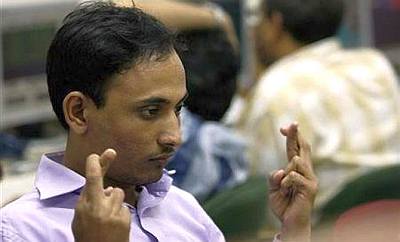
Investors remain cautious ahead of F&O expiry.
For the first time, the rupee declined to the low level of 80 against the US dollar in intra-day spot trading on Monday before ending the session 16 paise lower at 79.98 amid a surge in crude oil prices and unrelenting foreign fund outflows. At the interbank forex market, the local unit opened at 79.76 against the greenback but lost ground to touch the psychological low mark of 80 against the American currency. The local unit clawed back some lost ground and closed at 79.98, registering a fall of 16 paise over its previous close.

'Consider 40% to 50% in equities, 10% in gold as a hedge, and the remaining 30% to 40% split between multi-asset funds and hybrid funds.'

Ask rediffGURU and PF expert Nitin Narkhede your mutual fund and personal finance-related questions.

Information technology (IT) companies have been on the road to revival in the past one year. From being the worst-hit sector in 2022 with a loss of 26 per cent, the Nifty IT index closed 2023 with gains of 24 per cent. So far in 2024, the index is up around 7 per cent against the nearly flat Nifty 50 benchmark index. The IT index has been on a continuous decline in the last three sessions.

The market capitalisation of BSE-listed companies jumped to a record high of Rs 2,40,04,664.28 crore on Tuesday, driven by a rally in stocks that also saw the benchmark Sensex touching its lifetime peak of 53,887.98 points. Rallying for the second consecutive day on Tuesday, the 30-share BSE index closed at a fresh closing peak of 53,823.36 points, a jump of 872.73 points or 1.65 per cent. During the day, it zoomed 937.35 points to 53,887.98 points.

Investors shunned shares of Bajaj Finance on Friday, a day after the non-banking financial company (NBFC) reported a sharp contraction in its net interest margin (NIM) for the March quarter of the financial year 2023-24 (Q4FY24). The losses accounted for a fifth of the benchmark S&P BSE Sensex's 609-point loss. Most brokerages have tamed their earnings expectations for the next couple of quarters, after the management said it expected the pressure on NIMs to continue in the near term.
